About 30 percent of potable water is lost because of leakages worldwide with over 50 percent in developing countries. Digital Futures DEMOCRITUS project aims to solve this problem through smart control of critical infrastructures, using for instance sensor techniques to detect leakages at an early stage and minimize water loss.
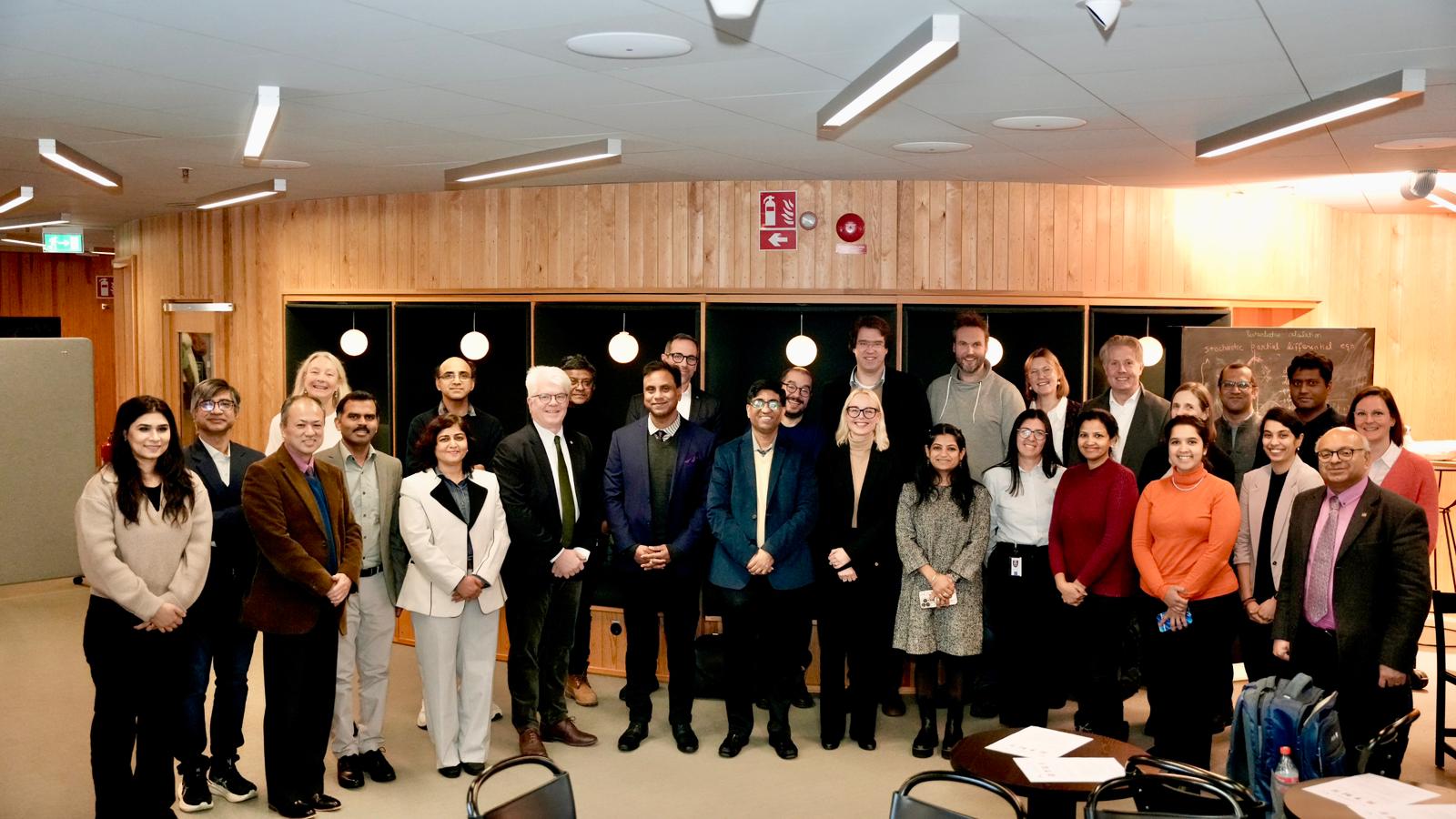
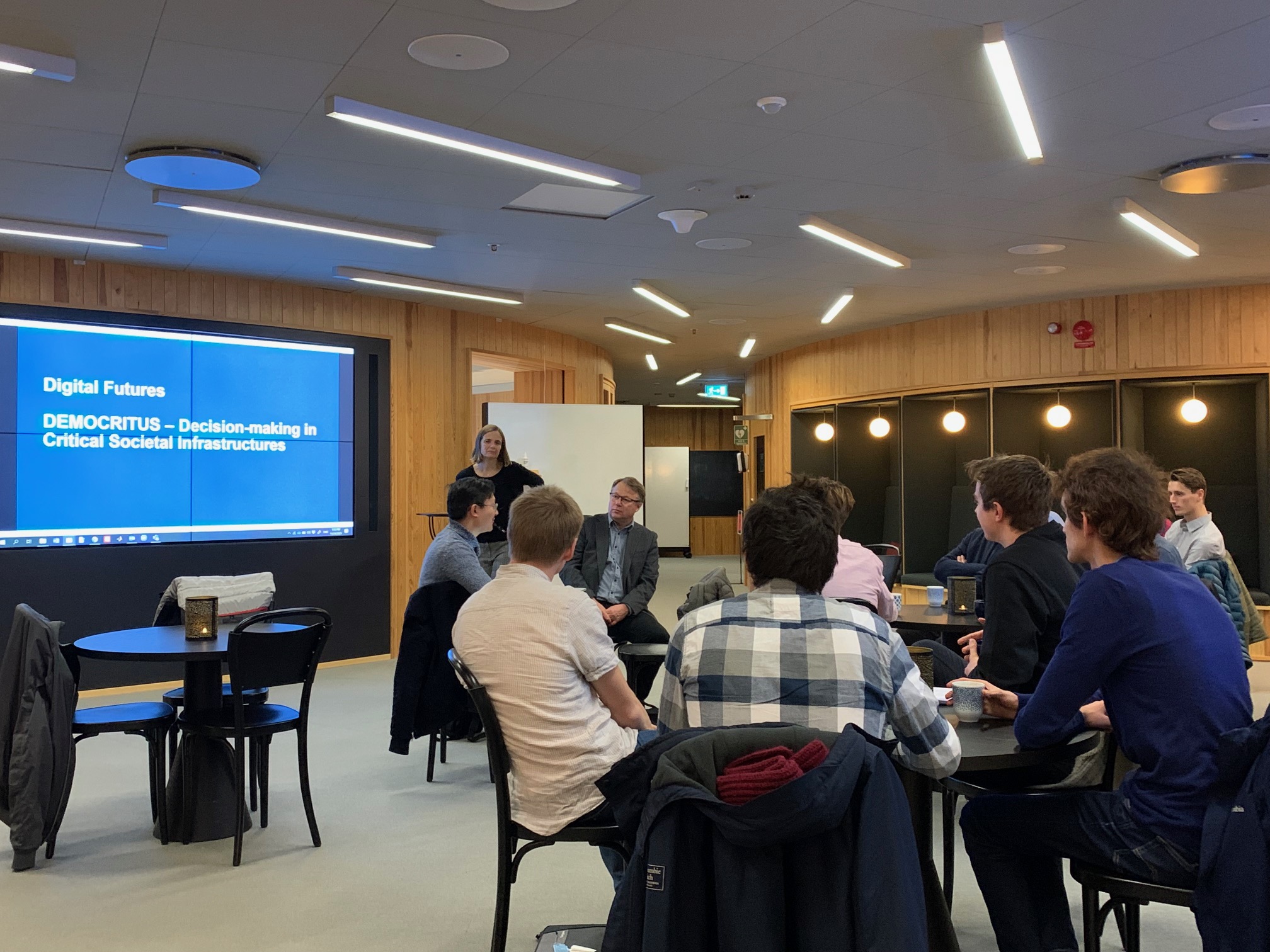
Multiple key stakeholders met at Digital Futures on 24 November to share their different perspectives and jointly find innovative solutions for more efficient use of water.
 Decision-making in Critical Societal Infrastructures (DEMOCRITUS) is a five-year-long research project within Digital Futures addressing the monitoring and control of critical infrastructures, like water distribution networks. These systems must operate efficiently, with predictable performance, and meet stringent safety and security requirements. Fundamentally they must be able to make informed decisions under constraints and in real-time.
The project is addressing the challenges of the digitization of water distribution systems, such as leak detection and contamination tracking, that can be approached with the help of model and data-based solutions, with the goal to perform real-time detection and mitigation, under privacy and communication capacity constraints.
– It is exciting to see that with the new developments of sensing technologies, water distribution is becoming a true cyber-physical infrastructure. Efforts like the DEMOCRITUS project are needed to make sure that no data remains unused and no water gets lost, says Viktoria Fodor, PI of DEMOCRITUS.
Several experts from the water and communication sector were invited to DEMOCRITUS first stakeholder workshop.
 Initial results from the project were presented by Carlo Fischione, Viktoria Fodor, Johan Karlsson and Henrik Sandberg from KTH, Sindri Magnusson from Stockholm University and Bengt Ahlgren from RISE.
Industrial views were shared by Alexander Myrsten from Stockholm Water Company, talking about existing and expected sensing and metering techniques in the water distribution network and in the homes, Roya Meidani from KTH and the Mistra InfraMaint project discussed infrastructure maintenance strategies, Mats Ericsson from LiU updated us about their contamination detection sensors and Bin Xiao from Ericsson about the challenges of maintaining the cyberinfrastructure.
Discussions then continued around the need for digitization, and the use of advanced technologies to support maintenance planning, leak detection, contamination tracking, and water flow management. With the help of smart metering, machine learning techniques, security and privacy provisioning, communication technologies and simulation and evaluation tools the goal is to find innovative solutions for more efficient use of water.
Link to the DEMOCRITUS: Decision-making in Critical Societal Infrastructures project