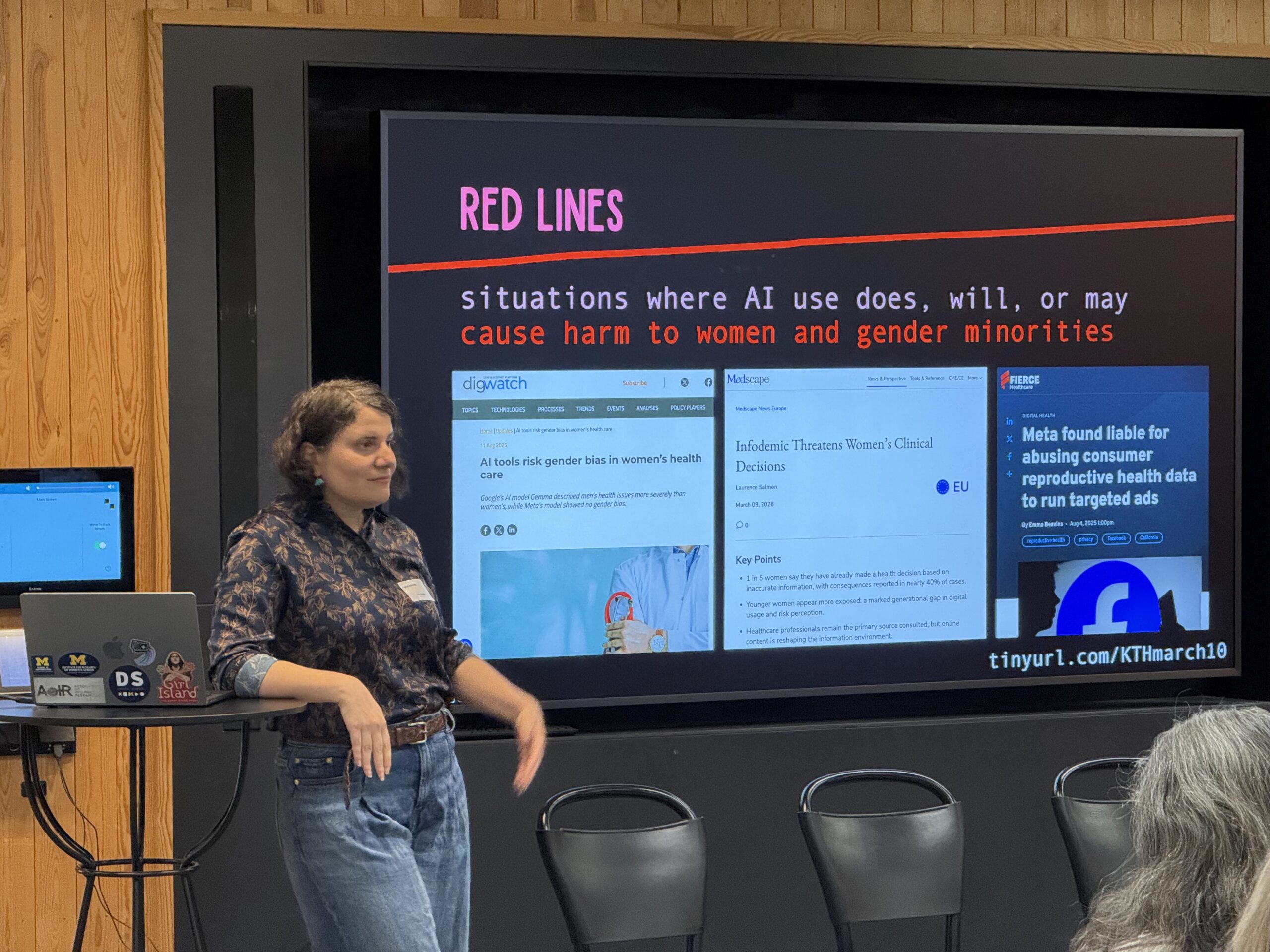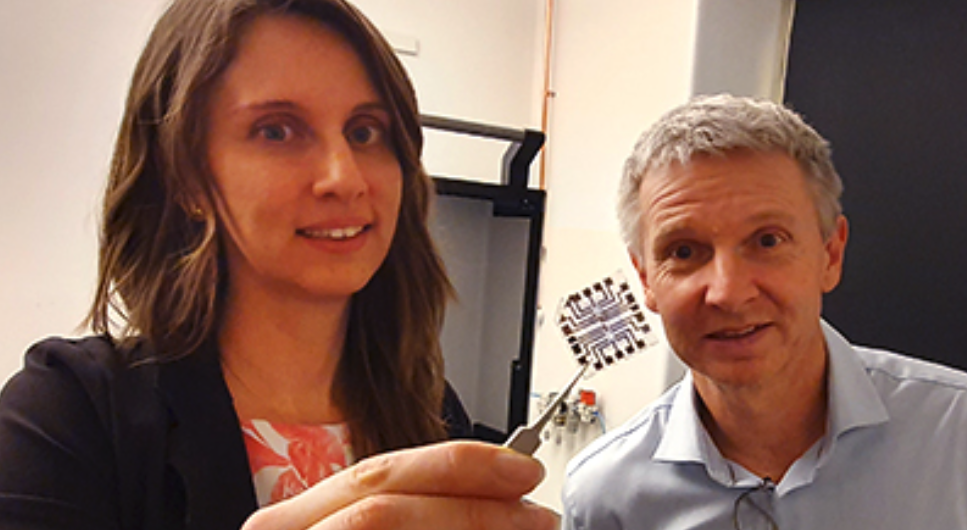
Two people stand indoors, one holding up a small, square electronic circuit on a metal tool, displaying it to the camera. Both appear interested and engaged, with a blurred background.

Innovative technique revolutionizes bioelectronics and critical sensors prototyping

A research team at KTH Royal Institute of Technology and Stockholm University has made a bioelectronics and sensor technology breakthrough. The team unveiled a fast-prototyping technique utilizing a standard Nanoscribe 3D microprinter, revolutionizing the fabrication of electrochemical transistors. Without needing cleanroom environments, solvents, or chemicals, the researchers successfully hacked 3D microprinters to laser print and micropattern semiconducting, conducting, and insulating polymers.

This novel method, reported in the journal Advanced Science, is crucial in rapidly prototyping electrochemical transistors for applications such as medical implants, wearable electronics, and biosensors.

The method can potentially substitute time-consuming processes that necessitate a costly cleanroom environment. According to Erica Zeglio, co-author of the study and a faculty researcher affiliated with Digital Futures, it also avoids using solvents and developer baths, which typically contribute to a negative environmental impact.

The applications range from monitoring living tissues to diagnosing diseases in point-of-care testing. With funding from various sources, including Digital Futures and the European Union’s Horizon 2020 program, this groundbreaking method accelerates bioelectronics research for more sustainable and cost-effective alternatives in the field.

Find out more in the article “3D microprinter hacked to fabricate transistors for bioelectronics” by David Callahan at KTH.

Photo: Erica Zeglio, left, with co-author KTH professor Frank Niklaus showing a finished transistor.
More news

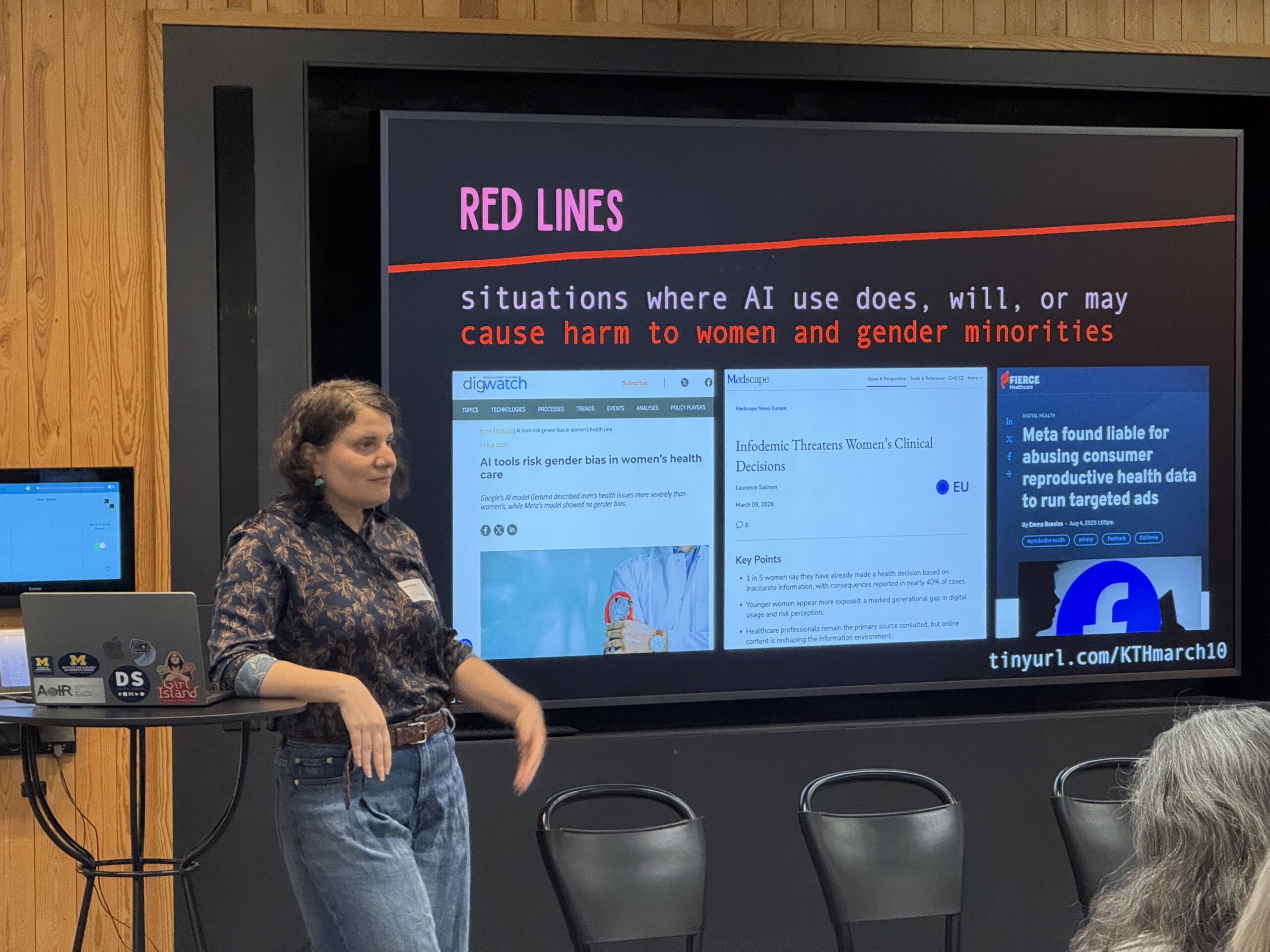
A person gives a presentation on AI ethics, with a slide titled RED LINES discussing AI situations that can harm women and gender minorities; relevant news articles are displayed on the screen behind them.

Exploring Emotion AI and Justice: A Conversation with Nazanin Andalibi

19/03/2026

Nazanin Andalibi, currently a Scholar-in-Residence at Digital Futures, is an Associate Professor at the University...

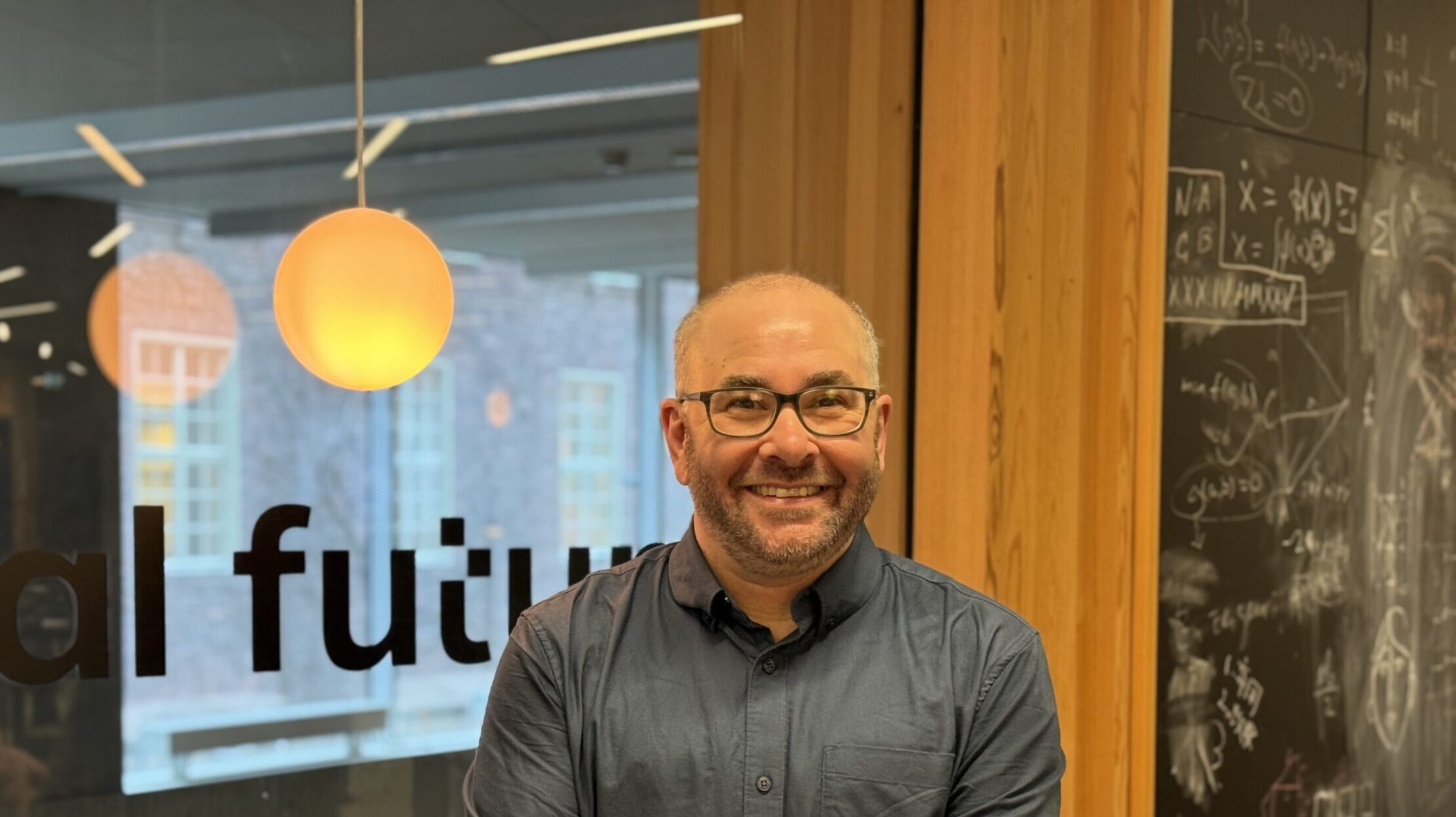
A smiling man with glasses and a beard stands at a round black table in front of a glass wall with partially visible text “digital future.” A blackboard and a hanging light are in the background.

How technology and identity shape each other: A conversation with Oliver L. Haimson

16/03/2026

Oliver L. Haimson is a leading scholar in social computing and human–computer interaction whose work...

A group of people are standing and talking in a modern, well-lit room with wooden walls. Some hold cups and wear rucksacks. Several tables and chairs are scattered around, and a presentation screen is visible in the background.

Successful 3rd Digital Futures Young Scientist Conference brings community together in Stockholm

16/03/2026

On March 12, 2026, researchers, PhD students, and postdoctoral scholars gathered at the Digital Futures Hub, for...

A person stands next to a screen presenting on RED LINES about AI use that may harm women and gender minorities, with related news articles displayed. The room has wood panelling and empty chairs in front.

Designing Care, Refusing Harm: Feminist Perspectives on AI in Gendered Health

12/03/2026

Researchers and practitioners gathered at the Digital Futures hub on 10 March 2026 for the invitation-only workshop Designing...